The Tanners and the Pigeons
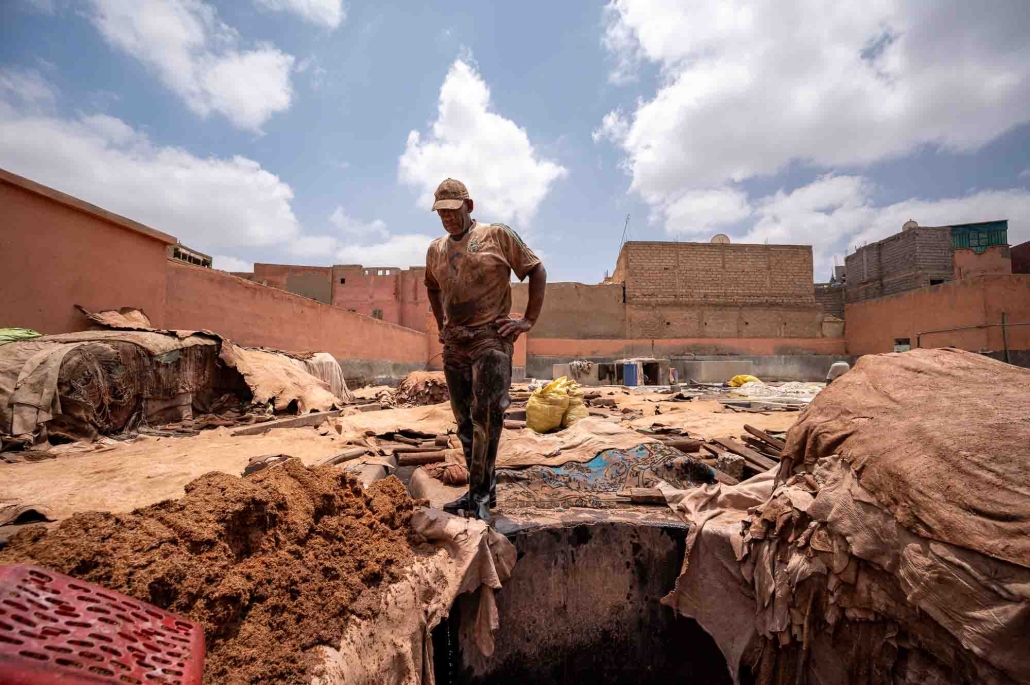
Jemma-Gouzon highlights the deep historical, technological, and familial ties between tanners and potters in Marrakech, relationships that likely date back to the city’s earliest days. These two crafts shared resources, techniques, and even symbolic meanings, despite being associated with opposing natural elements—fire for potters and water for tanners.
The old potters’ district, known as Tabḥīrt, was originally located just north of the tanneries but was later moved outside the city walls to an area called Fekhāra, which was formerly a cemetery. Potters recycled tannery waste for their kilns, while tanners used ceramic shards and bricks, known as sheqfa, in the process of scraping raw hides, a technique referred to as ashqāf. Women played a role in both crafts, particularly in the manufacture and decoration of traditional drums called t’arija. Symbolically, the connection between tanners and potters represents a balance between fire and water, reinforcing their intertwined existence.
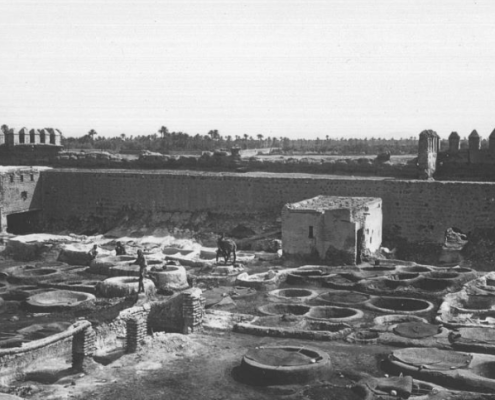
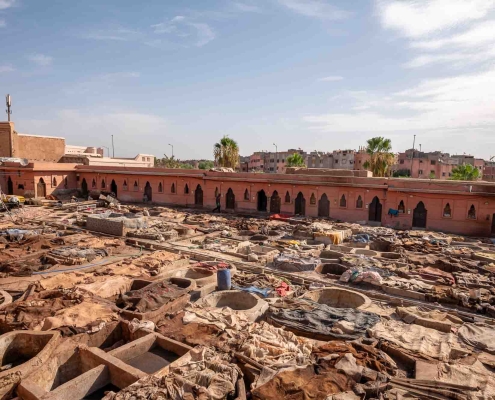
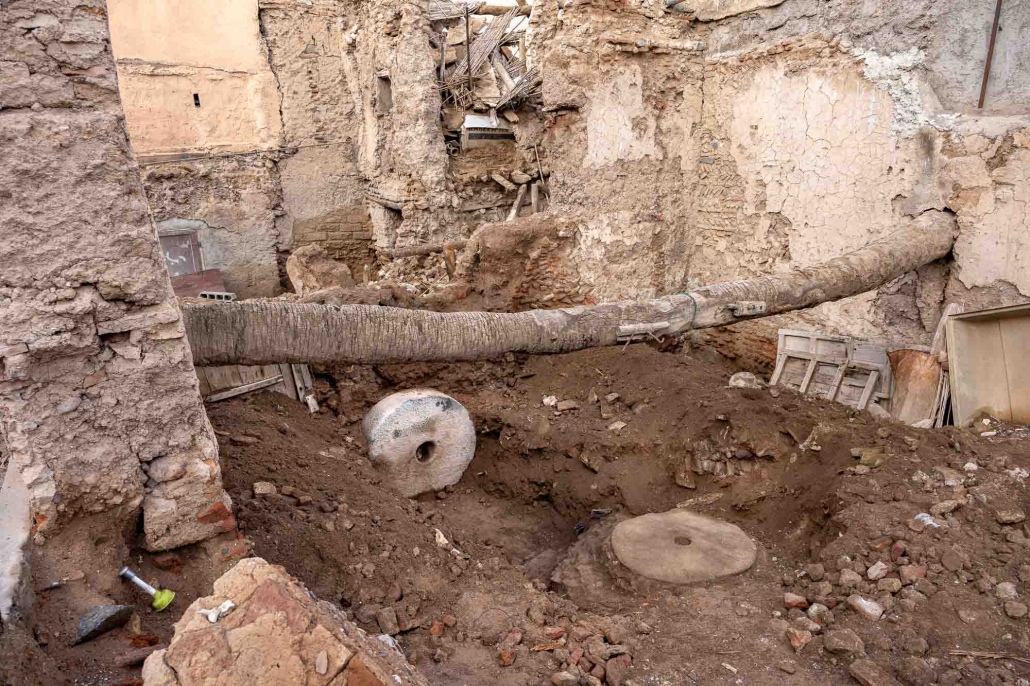
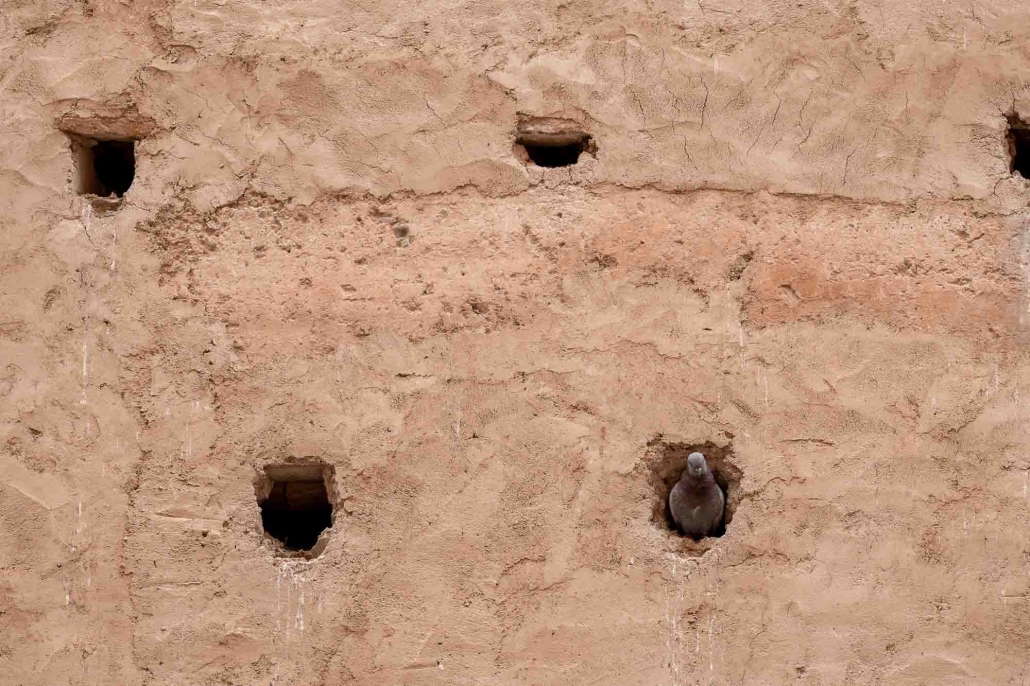
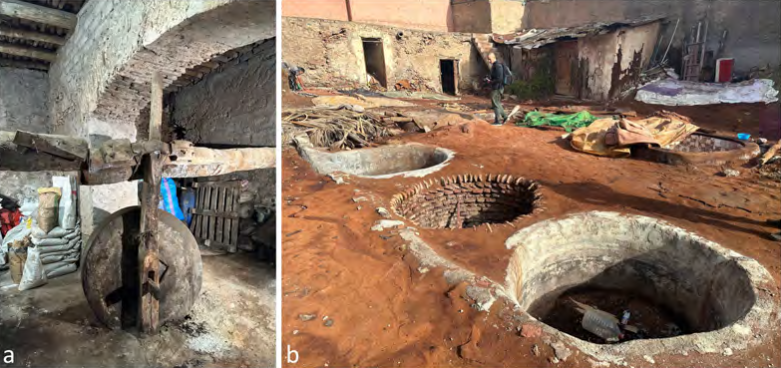
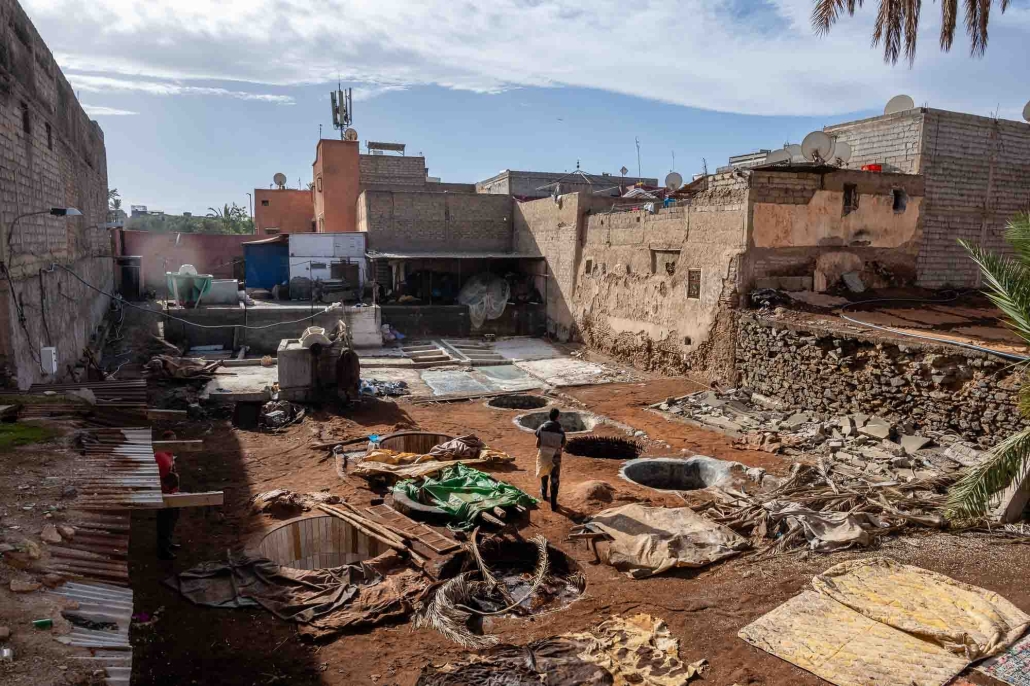
Excavations at a tannery mill in Marrakech revealed four ceramic pots embedded into the south wall. These pots, set horizontally with their openings facing outward, were part of the original construction and likely served as artificial nesting sites for pigeons. The construction techniques of the wall show a mix of rammed earth, bricks, and stones arranged irregularly, sometimes in a herringbone pattern known as opus spicatum. The pots, dating from the post-medieval period, most likely from the 16th century onward, feature comb-incised decorative patterns, with shapes suggesting they were jars and jugs designed for nesting birds. Inside the pots, remains of stalks, twigs, and feathers confirmed their use as pigeon nests, a function that was also affirmed by the mill owner.
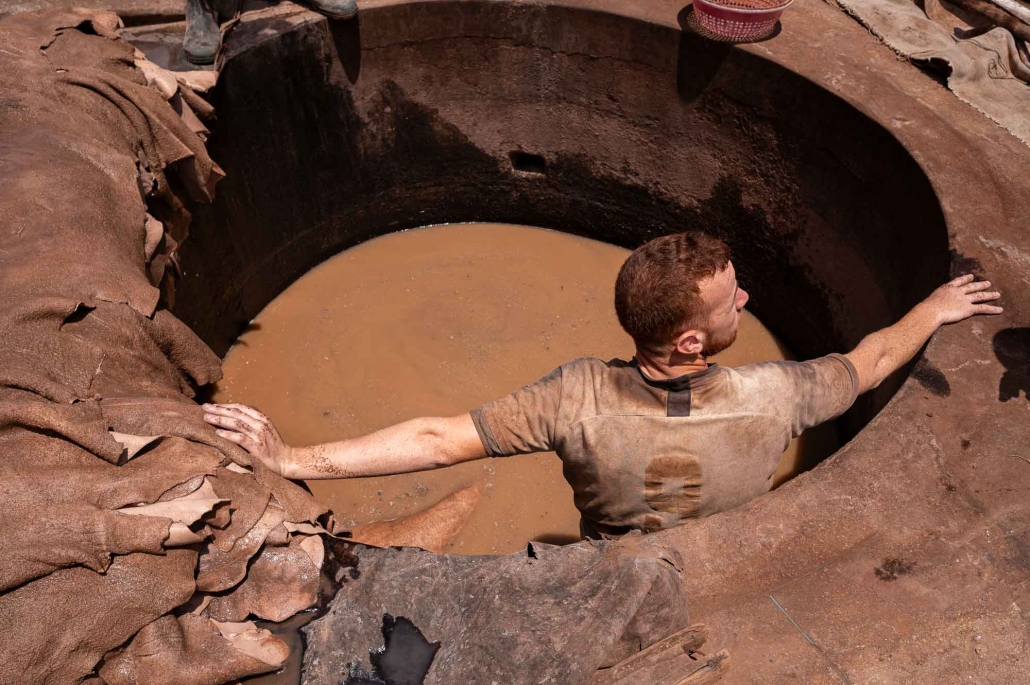
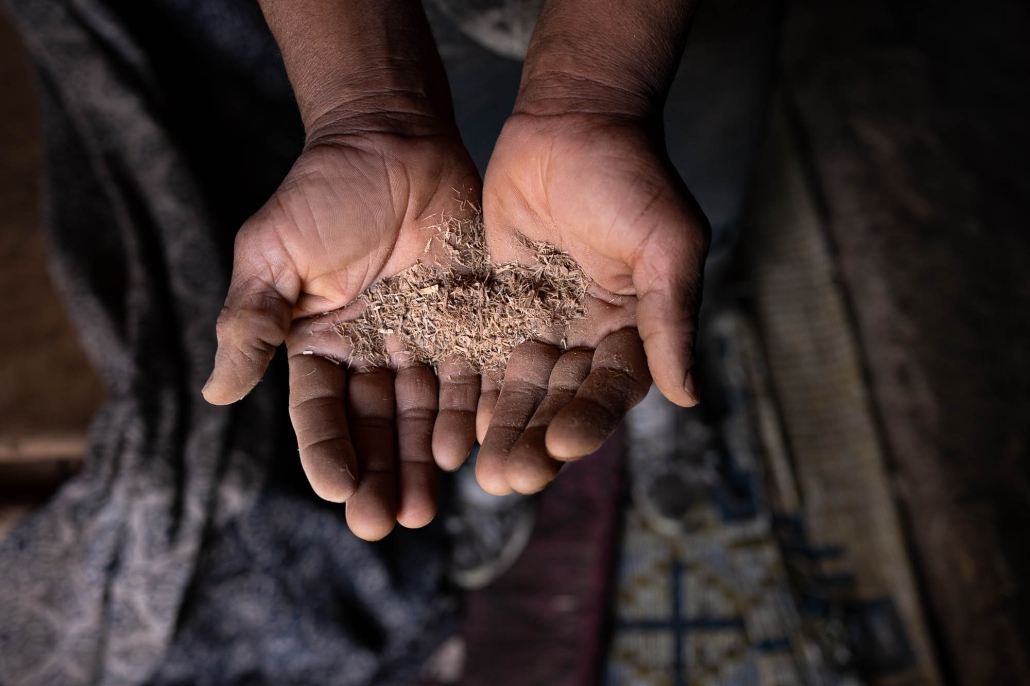
The integration of pigeon nests into the tannery structure is significant because tanners heavily relied on pigeon droppings in the tanning process. Rich in ammonia, pigeon droppings were used in a preparatory soaking stage to soften hides before tanning. Historical sources, including Islamic texts and 20th-century Moroccan tannery descriptions, document the trade in pigeon droppings. Tanners often raised pigeons themselves, as described by A. Hardy in Salé, where pigeon droppings were sold in bags of 10 to 17 kilos, enough to process 12 to 15 goat hides. Almost every tannery also had its own pigeon farm, demonstrating the practical necessity of this practice.
Beyond their practical use, Jemma-Gouzon explores the spiritual and symbolic importance of pigeons in Moroccan and Mediterranean traditions. Pigeons were believed to represent the souls of the dead, fertility, and divine protection, often nesting near saints’ tombs or sacred sites. Historically, pigeon breeding was a royal privilege, as seen in Fez, where bastilla, a pigeon pie, was considered a royal dish. Tanners in Marrakech also revered and protected the Western cattle egret, calling it the “bird of water and the underworld.”
Even today, pigeons hold cultural and culinary significance in Marrakech. Rooftop pigeon coops are still common, and pigeon meat continues to be used in traditional Moroccan cuisine and folk medicine. Pigeons also nest in city walls and historic buildings, maintaining their symbolic and practical role in Marrakech’s living heritage. The four embedded pots in the tannery mill thus serve as subtle yet powerful evidence of the enduring relationship between tanners, potters, and pigeon breeding, a tradition deeply woven into the city’s cultural and economic history.